
Kitchen & Pantry
Kitchen drawers that make everyday cooking easier
Arrange utensils and vessels around how meals are prepared in your home. Start with a drawer that interrupts cooking most often.
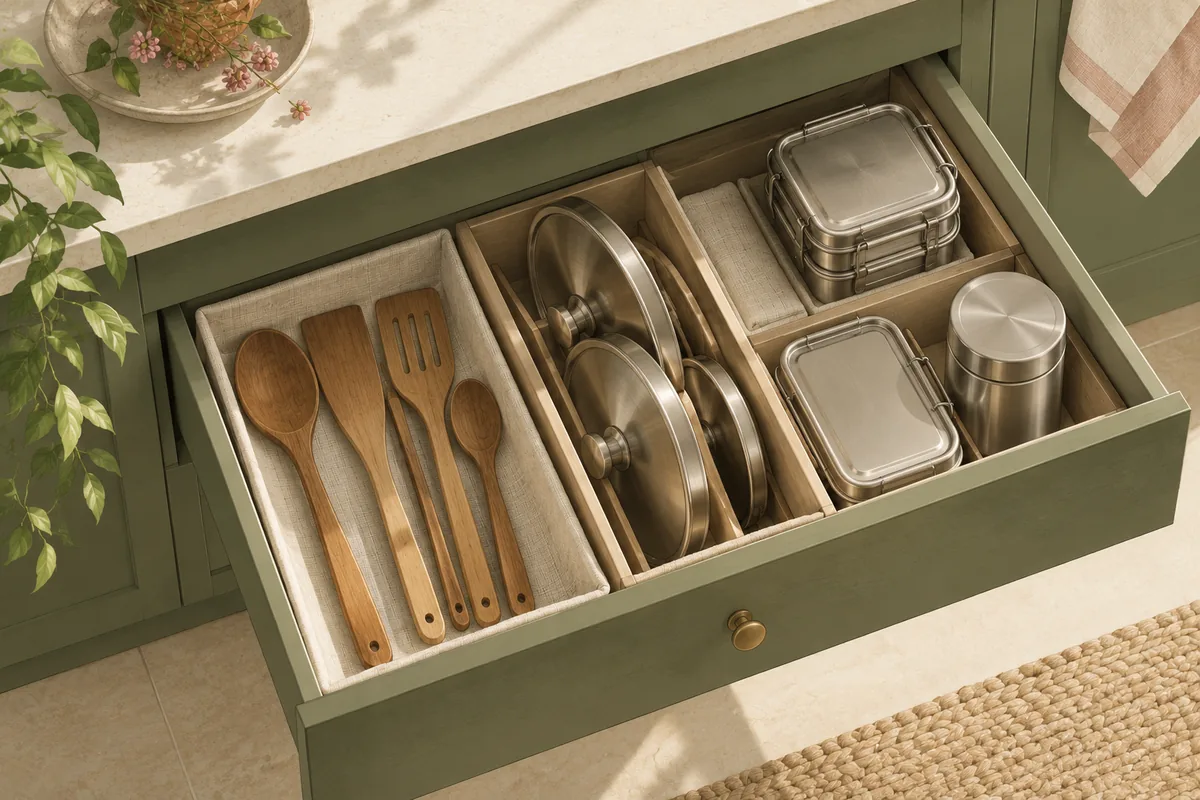
A kitchen drawer can be full without holding what you need. The useful spatula sits beneath occasional baking tools, lids slide into one another, and a lunch box has a base but no matching top. Rather than sorting the whole kitchen at once, choose the drawer that causes the most interruption during an ordinary meal.
Empty one drawer completely
Place its contents on a clear surface, checking for damaged items and duplicates you no longer need. Clean and dry the drawer before returning anything. Keep sharp tools safely separated while you work, especially in a shared kitchen with children nearby.
Group items by the activity they support. Cooking tools, serving pieces, preparation tools and lunch-box parts often deserve different homes. A tool does not have to remain in this drawer simply because it has always been there.
Place things near the task
Keep daily cooking utensils within comfortable reach of the cooking area, while considering heat, movement and safe access. Place preparation tools near the surface where ingredients are usually handled. Reserve more awkward spaces for occasional items that can be stored there safely.
Watch the kitchen in use if more than one person cooks. A system that relies on one person remembering an invisible rule will be difficult to maintain. Clear groups and straightforward access help everyone return things to the same place.
Solve the lids and lunch-box problem
Match bases and lids before choosing storage. Remove broken pieces or unmatched items that have no realistic use. Decide whether matched sets or separate, clearly grouped lids work better for your household’s routine.
- Nest only where it remains easy to lift out what you need.
- Keep the daily lunch-box set together in an accessible place.
- Allow containers to dry fully before storing.
- Follow the manufacturer’s guidance for food contact and wear.
For steel lids, a suitable rack or divider may make sizes easier to see. Test the arrangement before buying a fitted insert. Leave enough clearance for the drawer to close without catching handles or tall pieces.
Use dividers selectively
A divider helps when it stops an established group from drifting. It is less useful when it forces unrelated items into narrow compartments. Measure the usable internal space, including any fittings, rather than relying only on the drawer front.
Try the layout through several meals. If a frequently used item keeps landing elsewhere, move its assigned place closer to the real task. If putting something away requires removing several other pieces, simplify the arrangement.
Our kitchen organising support looks at these small movements together. A kitchen feels more settled when the things you need are easy to find and equally easy to return.