
Kitchen & Pantry
An Indian pantry that follows the way you cook
Build your pantry around the meals you make and the packs you actually buy. You can create clarity without decanting everything.
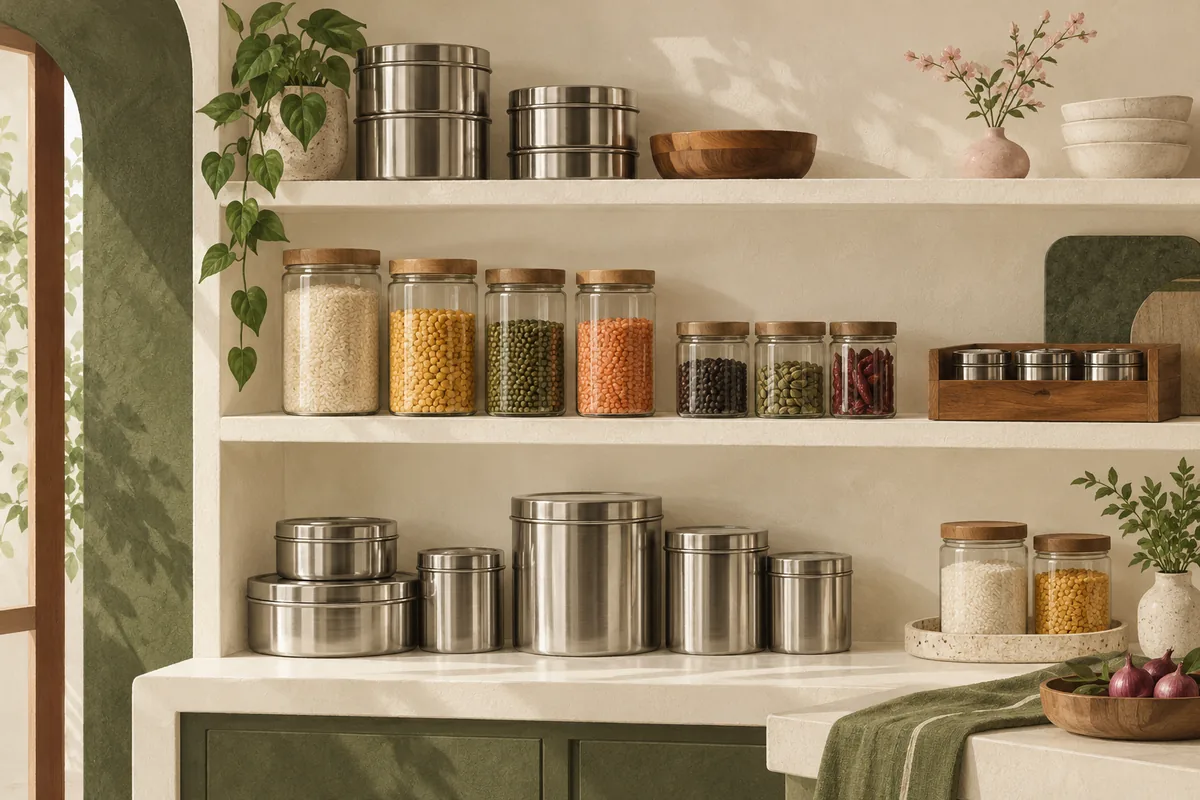
An Indian pantry may hold several dals, different flours, whole spices and the extra packets that arrive with a larger grocery order. The useful organising question is how those ingredients move through your kitchen. A shelf arranged for a photograph may be less helpful than a simple system that shows what is open and what needs using.
Check before you rearrange
Work on one shelf at a time. Check packs for damage, signs of pests and the dates and storage instructions on their labels. Separate anything unsuitable to use, then clean and fully dry the shelf before returning food. Avoid placing fresh groceries beside a suspected pest problem; seek appropriate advice before restocking that area.
Group ingredients by how you cook: breakfast, everyday dals and grains, baking or occasional dishes. Keep frequently used ingredients close to preparation space, while respecting heat and moisture. The space beside a hot hob may be convenient but unsuitable for certain foods.
Separate working stock from reserve stock
Give open packs a clear place and keep unopened duplicates together. Before adding an item to the shopping list, check the reserve area. Move the earlier suitable stock forward and review labels rather than relying on memory.
- Keep a short shopping list where the household can update it.
- Write the ingredient name clearly if packaging is removed.
- Retain date, allergen and preparation information from the original pack.
- Choose containers that are food-safe and appropriate to the ingredient.
Decant only when it improves handling or storage. Original packaging inside a suitable basket is often a perfectly workable choice. Do not pour a new packet onto old contents without checking, emptying and cleaning the container as appropriate.
Make the spice routine easier
Keep the spices you use daily together, with occasional ingredients nearby rather than mixed into the same crowded tray. Smaller working quantities may be easier to handle, while properly labelled reserves sit elsewhere according to their storage instructions.
Steel dabbas can work beautifully if their contents are identifiable. Put labels where you naturally look: on lids for a deep drawer or on fronts for an eye-level shelf. Use large, clear writing that everyone who cooks can read.
Plan a brief stock review
Before a grocery order, look through the open packs and reserves. Check what needs using and choose meals accordingly. A small review is easier than a complete clear-out every time the shelves feel full.
If the pantry arrangement repeatedly fights the cooking routine, our kitchen and pantry organising services can help connect the storage to how your household prepares food.