
Wardrobe & Closets
Reset your wardrobe before buying storage
A useful wardrobe starts with the clothes you wear and the way you get dressed. Give those habits room before choosing organisers.
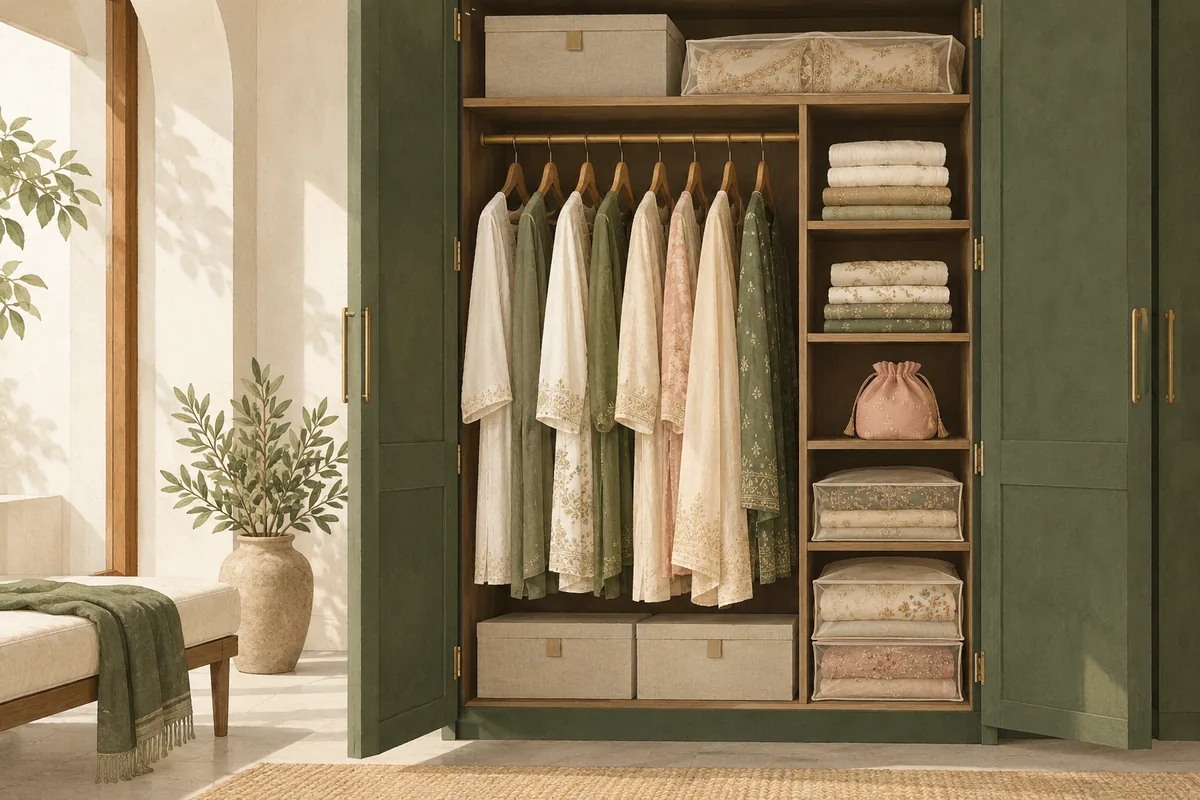
It is easy to blame a difficult wardrobe on too few shelves. Sometimes the real problem is that everyday kurtas sit behind occasionwear, trousers are spread across drawers, or clothes awaiting repair have quietly joined the ready-to-wear section. Start by making those differences visible.
Work through one section at a time
Choose a rail, drawer or shelf that you can finish without leaving the bed covered overnight. Make space for four groups: ready to wear, needs care, belongs elsewhere and undecided. You do not need to make a permanent decision about every sentimental garment in one sitting.
Check each item for practical readiness. A missing hook, a stain or an uncomfortable fit means it needs a different next step from a clean garment you could wear tomorrow. Give repairs and cleaning their own small, clearly identified place, then arrange the appointment or task that will move them along.
Arrange for your mornings
Keep the clothes you reach for most at the easiest height. Group by a logic you can remember: garment type, work and home, or outfits you regularly wear together. Colour order can be pleasing, but it is secondary to being able to find what you need.
Fold to suit the shelf depth. A very deep stack often hides garments at the back. Try two accessible groups only if you can reach both comfortably; otherwise reserve the rear for genuinely occasional items.
Give occasionwear appropriate space
Sarees, embroidered pieces and structured garments need care suited to their fabric and finish. Follow the garment’s care guidance rather than assuming every piece should be hung or tightly folded. Keep clean, fully dry items away from damp walls and avoid packing them so tightly that removing one disturbs everything else.
- Separate accessories that could snag delicate fabric.
- Keep an inventory note for pieces stored out of sight.
- Review garments after use before returning them to long-term storage.
- Ask a trusted textile specialist about valuable or delicate pieces.
Measure what is left
Only now look at organisers. Measure rail clearance, shelf height and drawer depth, and allow space for handles and hinges. Test whether you can remove and replace an item with one comfortable movement. A basket that fits the shelf but traps the garments behind it is not helping.
Leave a small landing place for clothes worn briefly but not ready for washing, with a regular review so it does not become a second wardrobe. For a more considered layout, explore our wardrobe organising support. The aim is a wardrobe that helps you get dressed, rather than one you have to carefully reconstruct every evening.